


The association
About lacrosse in Israel
The sport in numbers
Season 2026/27What guides us
Open to everyone
Lacrosse in Israel is open to players of any age with no previous experience. Clubs lend a full set of kit for a player's first season, so the cost of the gear is not what keeps anyone out of the sport.
Safety first
Every registered player needs a valid medical clearance and sports insurance, and every session is run by a qualified coach. The safety rules are the same in every league and every age group.
A fair competition
One league per age group, a single fixture list and qualified officials. Tables and results are published on this site at the end of each round, so every club sees exactly the same information.
What we do
Running the leagues
Setting the fixture list, appointing officials, keeping the tables and publishing the results across all four leagues.
Player registration
Keeping the national player register, medical clearances, sports insurance and transfers between clubs.
Training coaches and officials
Coaching and officiating courses every season, alongside refresher courses for those already qualified.
The Israel national teams
Running the men's, women's and youth national teams, including training camps and international competition.
Building new clubs
Supporting new clubs from the day they form, with help finding a pitch, sourcing kit and recruiting coaches for the younger age groups.
Lacrosse in schools
Taster programmes in schools and community centres, which is where most of our youth players first pick up a stick.
How we got here
Sixteen years from a single training session on a Jerusalem campus to four leagues playing a full season. These are the five moments that changed the sport here.
2010

The first club
A group of students at Givat Ram in Jerusalem began training with sticks carried in from abroad, with no home pitch and not one team to play against. Within a year they had registered the first lacrosse club in Israel and opened a weekly session that took anyone who turned up.
1club
2013

The first league
Three years on, four clubs were training regularly and the occasional exhibition game had stopped being enough for them. The first season opened with a fixed fixture list, qualified officials and a table that was updated at the end of every round.
4clubs
2017
The youth leagues
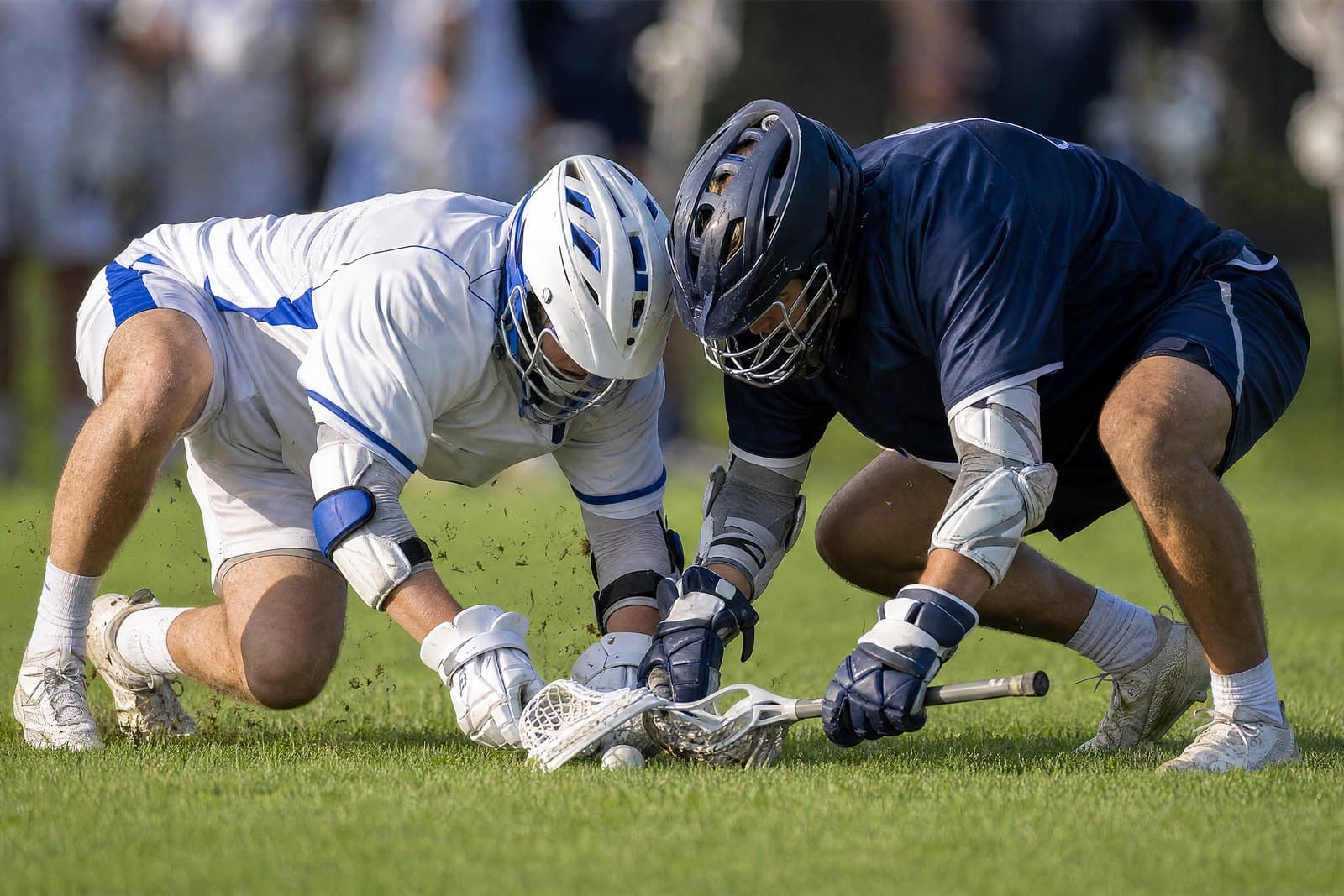
Until then this was an adult sport, and anyone who discovered lacrosse at twelve was left on the sidelines. Opening the two youth leagues made the pathway continuous from the age of ten through to the senior game, and moved the way into the sport into the schools.
2youth leagues
2021

The women's league
Two teams opened the women's league in a shortened season, with no way of knowing whether they would find opponents the year after. Today each of the larger clubs runs a women's programme of its own, and the league has grown to four teams.
4teams
2026

This season
Four leagues now run alongside each other — seniors, the two youth leagues and the women's league — with dozens of teams from every part of the country. The fixture list covers the whole season, and results and tables are published here at the end of every round.
4active leagues
Common questions about lacrosse
- What is lacrosse?
- Lacrosse is a team sport in which every player carries a stick with a net on the end, called a crosse, and uses it to catch, carry and pass a hard rubber ball in order to score in the opposing goal. The game was created by the indigenous peoples of North America, it is one of the oldest team sports in the world, and it is the fastest-growing team sport today. A lacrosse match is played between two teams on a grass field over four quarters, and the team that scores more goals wins.
- How is lacrosse played?
- In lacrosse each player uses a stick with a net on the end to catch the ball, run with it and pass it to teammates, and the aim is to put the ball into the opposing goal. No one may touch the ball with a hand except the goalkeeper, and only inside the crease. A lacrosse match is played over four quarters, a team loses possession when the ball goes out of play, and a foul sends the offending player off for a set time, leaving their team a player down.
- Where can you play lacrosse in Israel?
- The Israel Lacrosse Association runs the lacrosse clubs in the country and the leagues they play in. The club directory on the association's website lists the active clubs with their contact details.
- Do you need experience or equipment to start playing lacrosse?
- No. Lacrosse clubs in Israel take players of any age with no previous experience, and the usual way to start is a single taster session. The playing kit — stick, helmet, gloves and shoulder pads — is lent by the club for a player's first season, so the cost of the gear is not what keeps anyone out of the sport.
- Which lacrosse leagues are running in Israel?
- The Israel Lacrosse Association runs leagues for seniors, for juniors and for women. The fixture list, the table and the results of each league are published on the association's website.
- Is lacrosse a dangerous sport?
- Lacrosse is a contact sport, which is why it is played in full protective kit: helmet, mouthguard, gloves, and shoulder and elbow pads. In Israel every registered player needs a valid medical clearance and sports insurance, and every session is run by a qualified coach. The safety and playing rules are the same in every league and every age group.
Want to talk to us?
For questions about registering, starting a club, officiating or anything else, write to us or give us a call.